Heating Your Home in the Winter

As the weather gets colder and the night gets darker, you’re probably starting to think about the different ways to keep your home warm. In the UK, wood stoves, log fires and other wood-fueled heating sources have become increasingly popular. In this article, we’re going to talk about the different options for winter heating and the best type of wood to use. 

Log Fireplace 

The log fireplace is a great way to give your home a boost of heat in the winter, and when planned in advance can be fairly cost-effective. Not only are they aesthetically pleasing, but they are also able to quickly and efficiently circulate heat around your home. Additionally, wood tends to be cheaper than what you would spend on an electric or gas bill, especially if you’re willing to buy the wood in bulk.

fire place, heating, winter

The only downside to traditional fireplaces is they tend to release a lot of the heat through the chimney and can be more dangerous when left unattended.

Wood Stove 

Finding the right type of wood stove for your home depends mainly on the size of your house and it’s level of insulation. Oftentimes in newer builds, fireplaces and wood stoves are less common, but they may be worth the investment depending on your heating needs. wood stove, heating, winter

Wood stoves produce a great fire that is lovely to look at, but the real magic comes from the material it’s made out of. The majority of wood stoves are made out of cast-iron which is a material known for holding and radiating heat. 

Cast-iron wood stoves are more efficient than traditional fireplaces as they trap the thermal energy within the stove and emit the heat slowly.

Best Type of Wood? 

If you’ve decided you want to invest in either a fireplace or wood stove, you’ll likely want to know about the best types of wood to use. Wood can be expensive, but there are ways to get the most out of what you buy. We highly suggest using kiln-fired wood rather than the typical seasoned log. With Kiln-dried logs, you’ll get a much longer, smoother burn and much better value for your money. 

If you’d like to learn more about the difference between kiln-dried wood and seasoned logs, check out our article here. 

If you’ve got any questions regarding wood stoves, fireplaces or the best type of wood for your home, give us a call. We’d be happy to have a chat! 
Best Autumnal Trees for a Beautiful Garden

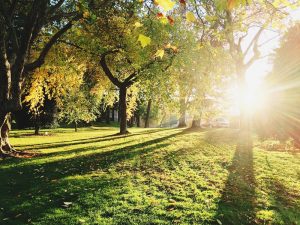
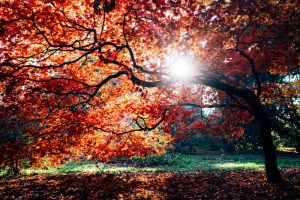
Autumn is an amazing time of year.  The leaves are changing colours and transforming gardens, streets and parks into a wonderful rainbow of red, yellow and orange. This seasonal transformation often provides inspiration for what trees you may want in your garden. That way, at this time of year to see the lovely autumnal tree colours, you just have to look at outside. Let’s take a look at the trees that are nicest during autumn…

1. Maple Trees

The Maple Tree is one of the most common trees found throughout the UK and are often found in parks. Their high tolerance for pollution makes them an excellent fit for both rural and urban locations. Their leaves gradually turn yellow and orange before reaching their notable, vivid red. 

autumnal tree 2. Cherry Trees

Although Cherry Trees are more widely known for their beautiful leaf display in Spring, they are also nice on the eyes all throughout Autumn. There are many different types of Cherry Trees, so you’ll need to decide which will be the best fit for your garden! 

3. Beech Trees

Beech Trees are another UK favourite, commonly found throughout all parts of southern England. Known for growing to heights of between 30-50 metres in the wild, their height is often capped when sold making them perfect for garden use. 

Why do leaves change colour? 

All of this talk of pretty tree leaves may have left you wondering, why do their leaves change colour? As the trees prepare for winter, their metabolism begins to slow down as they are able to absorb less and less light. If you want to read more about the science behind the autumnal tree colour changes, you check out our article, here. 

If you’ve got any questions, feel free to get in touch. We’d be happy to have chat! 

Storm Tree Care

Taking care of your trees is crucial, especially after a big storm. They are amazing conversation starters and when cared for properly, they will continue to enhance your garden year after year. British weather is notorious for driving rain and blowing winds, so it’s important you understand the best way to care for your trees after a heavy storm. Remember, just because a tree has survived countless storms over the years, doesn’t mean it will stay undamaged in the future. 

Pre-Storm 

It’s no surprise that high winds can cause serious damage to plants, trees and shrubs. This is why we urge you to keep an eye on the weather and make some preparations if you see high winds forecasted. It’s never a bad idea to give your trees an inspection before a storm and see if there are any loose branches ready to fly off. Removing loose branches is not only great for safety reasons, but it will also prevent further damage. If you have any saplings or newly planted trees, we highly suggest securing these down using straps and support frames. This is because their roots haven’t had adequate time to secure themselves in the soil.

Post Storm Inspection

tree care, broken tree, broken tree limb

After a big storm, we recommend giving your garden an inspection to look for signs of damage. There are a lot of different things you can look out for, but some might require the help of a tree care professional. One of the first things to look for is fallen or damaged electrical wires that have come into contact with the tree. Trees can become energised in these situations, making it very dangerous to remove yourself. 

Next, try to identify any branches or limbs that look loose or damaged. If possible, safely remove these to ensure they don’t fall and injure someone. Looking at a tree’s bark can help indicate whether there is any structural weakness. For example, holes and hollowed parts in the bark as well as loose and peeling bark are all signs that your tree may need some extra attention. 

DIY or Professional Help?

As arborists, we often get called out to help clean up gardens after big storms. While there are definitely parts of the post-storm clean up you can do yourself, it’s sometimes best to call in a professional. After years of practice, our teams can quickly and easily identify any issues with your trees and ensure that they get the best care possible. This type of full inspection and correction of any problems will help prevent any injuries or larger problems down the line.

If you’ve got any questions or would like to know more about how we can assist you and your trees after a big storm, why not give us a call? We’d be happy to have a chat! 

Flowering Trees

If you’re looking for a way to bring some life and colour into your garden this spring, you may want to consider planting some trees that will flower. There’s no better way to enhance the look of your garden than with some beautiful, flowering trees. They will bloom in the early spring and quickly bring lovely birds and butterflies helping you to welcome the upcoming summer.

If cared for correctly, these trees can be a long-lasting investment,  bringing you garden beauty for many years to come. Here are a few of our favourite flowering trees…

1. Saucer Magnolia

These trees have multiple, winding trunks and saucer-like layers of floral blooms. Growing around 20 to 25 feet, these floral garden additions bring bright bundles of light pink and purple once they’ve bloomed each spring. This is often used as a garden focal point and is sure to enhance the ambience all year round.

2. Amelanchier Arborea – Robin Hill Juneberry

This lovely tree often blossoms in early spring, ready for bringing subtle life to your garden throughout the summer. It reaches an average of 10 meters at fully maturity and has a great oval shape.

3. Malus Evereste – Crab Apple

This is a great addition to any garden as it only reaches a height of 7 meters. When blooming it transforms from light pink buds to lovely white flowers. It’s subtle for most gardens and thrives from early spring until autumn.

Tips for tree care

It’s important that when choosing your tree from the nursery, you properly inspect it and check for any unwanted insects or signs of early decay. It is also important that throughout your tree’s life span, you are continually looking at the health of its leaves, bark, branches and trunk. If there are any issues happening within your tree, they will most likely show up here.

If you are unsure of whether or not your trees are showing signs of decay or ill health, you may want to consider calling in a seasoned arborist. At Butlers, we specialise in tree care and would be more than happy to give your trees an inspection. Why not give us a call today? 

Spotting/Managing Ash Dieback

We’ve spoken about Ash Dieback in the past. We wanted to bring you some more information about the disease, but more importantly how to manage your trees if they have it. Firstly, here’s a bit of information:


ash dieback, dying trees, diseased trees, what is ash dieback

Common names: Ash Dieback, Chalara

Scientific name: Hymenoscyphus Fraxineus

What trees does it affect?: Ash Trees

Areas affected so far: The whole of the UK

Origin: Originally from Asia, arrived in the UK via Europe


What does ash dieback look like?

In order to best care for your trees, you first need to know how to spot diseases like Ash Dieback.  It’s important to understand that Ash dieback can affect ash trees of all ages. Generally, younger trees succumb to the disease quicker but in general, all affected trees will have these symptoms:

  • Dark patches on leaves in the summer
  • Wilting leaves that may have black discolouration
  • Early shedding of leaves
  • Diamond-shaped, brown lesions are developed where branches and trunk meet
  • Inner bark looks brownish-grey under the lesions
  • New growth from previously dormant buds further down the trunk – this is known as epicormic growth and is a common response to stress in trees

What is ash dieback?

Ash dieback (Hymenoscyphus fraxineus) is a fungus which originated in
Asia. It doesn’t cause much damage to its native hosts of the Manchurian ash (Fraxinus mandshurica) and the Chinese ash (Fraxinus chinensis) in its native range. However, its introduction to Europe about 30 years ago has devastated the European ash (Fraxinus excelsior) because our native ash species did not evolve with the fungus and this means it has no natural defense against it.

What happens to the tree?

The fungus overwinters in leaf litter on the ground, particularly on ash leaf stalks. It produces small white fruiting bodies between July and October which release spores into the surrounding atmosphere.

These spores can blow tens of miles away. They land on leaves, stick to and then penetrate into the leaf and beyond. The fungus then grows inside the tree, eventually blocking its water transport systems, causing it to die. The tree can fight back, but year-on-year infections will eventually kill it.

If you have any questions about ash dieback, feel free to give us a call.

Garden Goals for 2020

The New Year means you can begin planning for the spring and summer in terms of how you want your garden to look. While it’s easy enough to keep everything looking the same, you may be wanting to spice your garden up slightly in the upcoming months. So, how can you plan for these changes and ensure that your garden is looking at it’s best in time for summer?


Understanding what’s already there

The first step to attaining an aesthetically pleasing garden that will be the envy of all your friends and family is understanding the types of plants and trees you already have grown, By doing this, you can best understand how to prune and prepare them in time for the warmer weather. You can do some research online, or you can give a local arborist a call to come to check out your trees and they will advise you on how best to care for them and whether they are in good health.


Scheduling removals, trimming and pruning in advance

While it may be tempting to wait until the last minute to call your tree service providers, we definitely don’t suggest doing so. Staying in contact with your arboriculture specialists throughout the year will not only build a strong relationship with them, but it will mean your trees will be getting attended to at the best possible times.


when to plant, sapling, 2020 garden goals

Knowing when to plant

Like most aspects of life, there are some times that are better to be doing things than others. Planting trees and plants is no different. If you’re planning on adding new species to your garden, we highly suggest doing some research prior to making any arrangements. The last thing you’d want is to plant your new sapling at the wrong time of year, only to have it die a few months later.


Overall, there a lot of different things you need to take into consideration when it comes to planning your garden in 2020. If you have any questions about our services, please don’t hesitate to get in touch.


Winters Coming…Is Your Garden Ready?

The dropping of temperatures means that winter is well on its way. If you haven’t already, it’s time to begin thinking about preparing your garden for winter. There are a few different things you need to keep in mind, let’s take a look. 

Tree Inspection 

At this point, most of your trees will be barren due to their yearly autumnal shedding of leaves. This provides you with the perfect opportunity to do a full inspection of the trunks and branches and check for any areas of concern. Here are a few things you should look out for:

  • Holes and breaks in the bark 
  • Signs of insect infestation 
  • Loose or broken branches 

Clearing of at-risk branches/limbs 

Once you’ve done a garden inspection and given your trees a good look, you may need to take some action. The last thing you want is to have your trees decaying over the winter or have dangerous branches at risk of falling. It is a good idea to call in a specially trained arborist to come to assess the situation and they can decide the best method of action. 

Clearing fallen leaves 

If you have trees in your garden, that means you are likely to have a hefty collection of leaves that have fallen. Unless, of course, you have a garden full of beautiful evergreens. If you fail to remove these fallen leaves you’ll end up with an unfortunate mess to clean up in the spring. This may also allow unwanted fungi to form due to the damp conditions throughout the winter period. 

Wrap new trees and shrubs 

The low temperatures that winter can bring make it crucial to wrap up and protect any newly planted trees that you have in your garden. The same goes for shrubs and plants that you fear may be negatively affected by the cold. 

Prune your roses 

If your garden is home to a few rose bushes, it’s time to get pruning. The winter is the ideal time to get your roses pruned in time for the spring. 

Hopefully, this article has given you some insight into the different areas that you should keep in mind when making your winter garden preparations.

If you have any questions about how to best prepare your trees for the cold temperatures, don’t hesitate to get in touch. We’re always happy to have a chat. 

Tree Benefits: Facts & Benefits


We love trees, but you already knew that. We’ve compiled a few of our favourite tree facts and some of the many benefits trees can offer us and you can find these all below: 


Garden decor 

This is the obvious one, trees are beautiful and can really add to your garden atmosphere. There are so many different species that all provide different amounts of shade, aesthetic and add to the general look of your landscaping. 


Marking the seasons


This goes along with their ability to enhance a gardens look and feel. Of course, depending on where you live, trees will help mark the changing of the different seasons. There’s nothing better than looking out of your window and seeing that some of the leaves have changed to a lovely orange colour marking the beginning of autumn. Similarly, when spring begins to approach, you’ll notice the leaves starting to sprout again. 


Cleaning the air and producing oxygen 


Trees actively absorb odours and pollutant gasses. They do this by filtering particles of air and trapping them in their roots and bark. In addition to trapping the unwanted air particles, they produce our much-needed oxygen. Studies show that mature trees can produce enough oxygen for over 18 people within a year. Pretty cool, right? 


Water! 


In one day, a tree can transfer 100 gallons of water up out of the ground through its roots and discharge it into the air! They also help reduce stormwater run-off. They do this by trapping fairly large amounts of water high up in their canopies which is then evaporated back into the atmosphere. This also helps control water pollution, especially after a big storm. 

Fruit and helping economies 


As there are so many different species of trees, it can be easy to forget that there are so many fruit-bearing trees. For example, a small apple tree can provide 15-30 bushels of fruit each year! Now, imagine having 5-10 fruit trees. That’s a lot of fruit! This mass amount of natural fruit production offers economies around the globe the opportunity to harvest and flourish. 


They bring people together 


This is our last and favourite fact about trees, and it’s one you might not think about. Trees can become a type of landmark for communities, towns and friend groups. Growing up you may have had a tree in a park that you and your friends would always meet at and play around. Or, perhaps, you remember playing on the tree swing at yours or your friends’ house. Or, maybe as you got older a tree in your community became a means of direction, ‘take the left after the massive tree on Church St.’ 

However you interact with trees, remember to take the time to appreciate them for the great work of nature that they are. If you have trees in your garden that need some love, don’t hesitate to get in touch. We’re always happy to come make sure your trees are as happy and healthy as possible! 


Leaves Changing Colour… What Does This Mean?


Autumn is fast approaching which means you’ve probably noticed the leaves on your trees changing colour.  This is completely normal don’t worry, but you may be wondering what causes this change every year. That’s why we’re here to give you all the information you need. 

It all has to do with something called Chlorophyll. Chlorophyll is the pigment inside leaves that give them their beautiful green colour.  All throughout the spring and summer, your leaves are continually producing chlorophyll and that’s what keeps your leaves looking nice and healthy. However, when it starts to get colder, the leaves start to slow on their chlorophyll production. The production makes smaller and smaller pieces and this is when the leaves begin to change colour. The tree can actually reuse some of the particles in the chlorophyll. This is what gives the leaves the typical orange/red colour right before they fall off. 

Temperature and amount of sunlight will also have an effect on when your trees start to lose their leaves. If they are still exposed quite bright sunshine and moderate temperatures, the leaves may stay greener for longer than one who’s in a shaded area with temperatures more on the chilly side.


If, however, the leaves on your trees start to change colour out of season, this may be a cause for concern. Out of season leaf discolouration often suggests some type of decay or infestation. While you can leave it and hope the trees natural defences sort this out, it’s best to act early and have a specialist come take a look.


At Butlers, we’re always happy to come take a look at your trees and make sure they are happy and healthy. Give us a call today and we can discuss your options.


New Team Member

The Butler’s team gains a new member. 


Scott Butler, fifth-generation, now officially joins the team at G A Butler & Sons Ltd, or as they’re often known ‘BUTLERS…the tree people’.

For over 100yrs the Butler family has been in the tree business. It has been said that Harry, Ray, Graham, Luke, Stephen & Matthew Butler (Great-great granddad, Great Granddad, Granddad, Dad and Uncles) have sap and chainsaw oil in their veins. This can also be said about Scott, who for the last 16yrs has been itching to get stuck into the day to day activities of the family business. 

As a small boy, he would visit the site with his Mum to see what everyone was up to. When he was old enough to go with Granddad when surveying and quoting jobs, he would be keen to go and spend a day visiting clients. Then as a young teenager, he would come out on-site to be involved, playing his part in a team as often as he could. These early years helped shape Scott into the young man he now is and set him in good stead for a long and successful career in arboriculture.  In September Scott will start his official training at Sparsholt College. It will be a one day a week apprenticeship scheme, with on the job training and experience.

This is part of what makes ‘BUTLERS…the tree people’ stand out from the crowd. Scott and his brothers and cousins (yes, there are a lot of Butler boys!) are in a great position to build on the skills, experience, reputation and hard work of previous generations.

Scott has made a great addition to our team and we are looking forward to seeing how his skills progress!